


Differences in Application Scenarios Between Premium Grade and Analytical Grade Ammonia Water from Yimin Chemical for Semiconductor Purposes
In testing laboratories related to semiconductors and precision electronics, ammonia water is commonly used for pH adjustment, sample pretreatment, metal ion precipitation, impurity masking, as well as basic experiments such as inorganic synthesis and ion separation. Users repeatedly ask one question during reagent selection: what are the specific indicator differences between Guaranteed Reagent (GR) and Analytical Reagent (AR), and how to choose for semiconductor precision analysis scenarios. The following explains each item with reference to implementation standards and product data.
I. Scenario pain points determine grade selection is not a price issue
Documents show that interferences in such scenarios mainly come from metal ions including sodium, magnesium, potassium, calcium, iron, copper, lead and anionic impurities such as chlorides, sulfates and phosphates. These impurities cause detection baseline drift and interfere with qualitative and quantitative results. Ultra-high precision working conditions impose stricter control requirements on trace impurities of multiple elements. Impurities introduced by reagents will be superimposed on blank values. Therefore, grade selection is essentially to judge whether impurity limits can meet the requirements of the test method.
II. Guaranteed Reagent vs Analytical Reagent: identical values for most items, differences concentrated on a set of indicators
According to GB/T 631—2026, the mass fraction of ammonia (NH₃) in chemical reagent ammonia water is 25~28% for Guaranteed Reagent, Analytical Reagent and Chemical Pure. All grades are required to be colorless transparent liquid without suspended solids or precipitates, with the pungent odor of ammonia.
Items with identical limit values include:
• Residue after evaporation: GR ≤0.002%, AR ≤0.002%
• Chloride (Cl): GR ≤0.00005%, AR ≤0.00005%
• Sulfide (S): GR ≤0.00002%, AR ≤0.00002%
• Carbonate (as CO₂): GR ≤0.001%, AR ≤0.001%
• Substances reducing potassium permanganate (as O): GR ≤0.0008%, AR ≤0.0008%
• Magnesium (Mg), Potassium (K), Calcium (Ca): GR ≤0.0001%, AR ≤0.0001%
Items with tightened limits focus on sulfates, phosphates and a group of heavy metals:
• Sulfate (SO₄): GR ≤0.0001%, AR ≤0.0002%
• Phosphate (PO₄): GR ≤0.00005%, AR ≤0.0001%
• Sodium (Na): GR ≤0.0001%, AR ≤0.0005%
• Iron (Fe): GR ≤0.00001%, AR ≤0.00002%
• Copper (Cu): GR ≤0.000005%, AR ≤0.00001%
• Lead (Pb): GR ≤0.00001%, AR ≤0.00005%
It can be seen that the two reagent grades have consistent requirements for residue after evaporation, chlorides, sulfides, carbonates, magnesium, potassium and calcium. The gaps lie in sodium (5x difference in limit), sulfate, phosphate, iron, copper and lead (2x difference in limit). For methods targeting sodium, iron, copper and lead as analytes, this difference will be directly reflected in reagent blank values.
III. Grade differences require supporting test methods
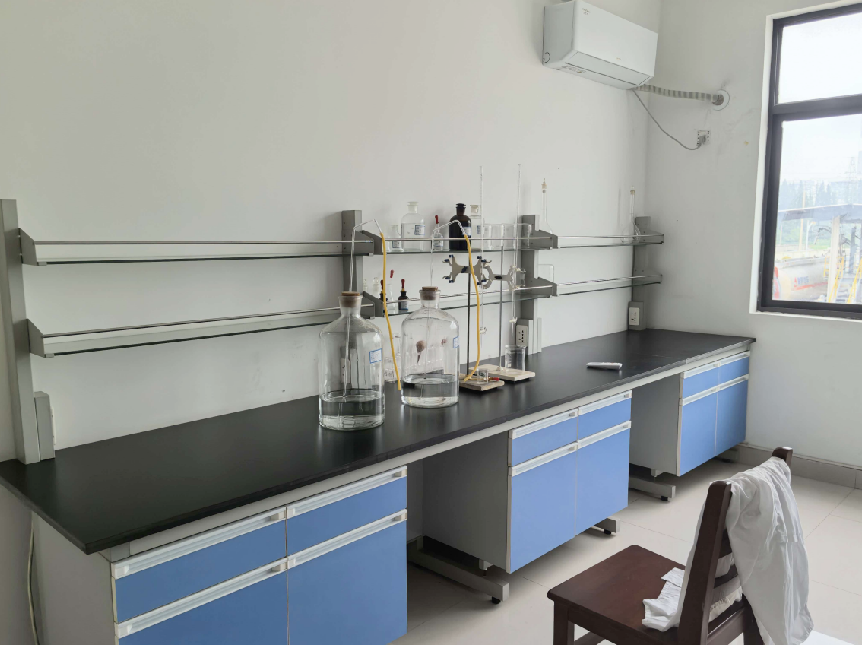
The supporting test procedures of GB/T 631—2026 cover full scope: 55mL (50g) sample is taken for residue after evaporation determination per GB/T 9740. The referee methods for chloride, sulfate and phosphate adopt turbidimetry / colorimetry in accordance with GB/T 9729, GB/T 9728 and GB/T 9727; ion chromatography is also acceptable per GB/T 34672-2017. Sulfide is determined by colorimetry after adding alkaline lead acetate solution to the sample. Carbonate is tested by diluting with CO₂-free water and adding saturated barium hydroxide solution to observe turbidity. The referee method for metallic impurities is flame atomic absorption spectrometry (acetylene-air flame); ICP-AES and ICP-MS are alternative options. For substances reducing potassium permanganate, acidify the sample, add standard potassium permanganate solution and boil; the pink color shall not disappear completely. When using Guaranteed Reagent, the testing capability must match the tighter limits.
IV. Sourcing strategy by application scenarios
• Routine chemical analysis, sample pretreatment, acid-base titration: limits of Analytical Reagent are sufficient.
• Trace metal determination, blank-sensitive analytical methods: Guaranteed Reagent features more suitable limits for sodium, iron, copper and lead.
• Supporting semiconductor and precision electronics manufacturing: High-purity ammonia water and electronic-grade ammonia water are available for this sector. High-purity grade specifies trace limits for more than 30 impurities including alkali metals, heavy metals and transition metals, mainly tested by ICP-MS with ion chromatography for anions, packed in integrated PE/PFA bottles. Electronic grade complies with SEMI industry specifications, classified into EL, UP, UP-S, UP-SS grades with additional control of liquid particle indicators. Impurity limits are progressively tightened from Chemical Pure to Guaranteed Reagent and then to High-Purity grade for configuration by accuracy requirements.
V. Tiered supply and supporting capabilities of Yimin Chemical
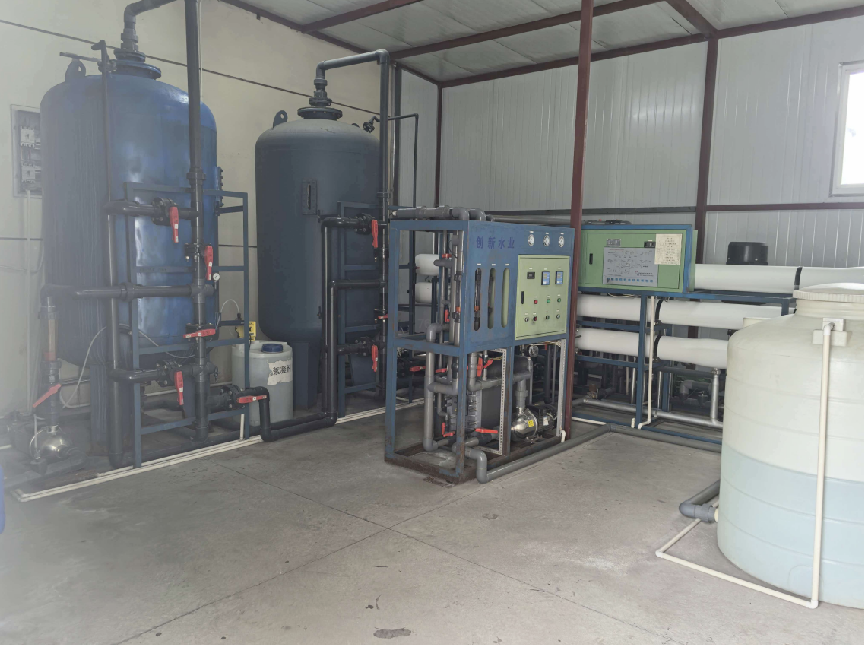
Taixing Yimin Chemical Co., Ltd. classifies its chemical reagent ammonia water into four grades complying with GB/T 631—2026: Guaranteed Reagent, Analytical Reagent, Chemical Pure and High-Purity. GR, AR and CP are applicable for routine chemical analysis, sample pretreatment, acid-base titration, while high-purity ammonia water serves ultra-high-purity applications such as semiconductors and precision electronics. Its offerings can be summarized in three points:
• Full-gradient impurity control: aligned with full national standard specifications, impurity limits are tightened stepwise from CP → AR → GR → High-Purity, covering general laboratory, precision analysis and semiconductor manufacturing demands.
• Multiple optional test schemes: traditional turbidimetry / colorimetry for anions with low equipment threshold and easy laboratory implementation, plus ion chromatography as an option; metal impurities can be detected by flame AAS, ICP-AES or ICP-MS.
• Tiered standardized packaging system: glass packaging for conventional grades; integrated PE/PFA bottles for high-purity ammonia water. All products feature uniform compliant hazard labels.
For delivery, custom non-standard concentrations are supported. Packaging options include 25L, 200L, 1000L IBC tanks and bulk tanker shipment. Packaging, storage and transportation follow GB 15346; labels comply with GB 15258 marked "Corrosive", Packaging Category III, conforming to GB28644.2. Target industries include university research laboratories, precision electronics & semiconductors, pharmaceutical R&D and enterprise quality inspection institutions.
VI. Four dimensions for supplier evaluation
There is no unified public evaluation standard for brand reputation in the reagent industry. Purchasers usually judge by verifiable facts: first, consistency between indicators and standards; second, correspondence between test methods and national standard referee / alternative methods; third, compliance level of packaging, labeling, storage and transportation; fourth, supply continuity for multiple grades and custom non-standard concentrations. All items above can be compared item by item through certificates of analysis and technical documents, delivering more reliable conclusions than subjective impressions.


