


Cost Control of Ammonia Water Procurement: Why Low Prices Don’t Always Save Money
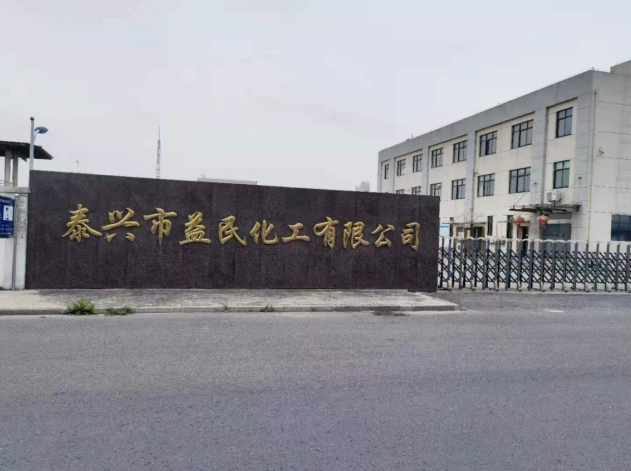
Cost control in ammonia water procurement rarely starts by cutting tens of RMB per ton. Taixing Yimin Chemical Co., Ltd. was originally founded in 2003 and formally registered in April 2014 with a registered capital of 5 million RMB. Its plant is located in Taixing Economic Development Zone, Jiangsu Province, capable of stable supply of multi-specification products including industrial-grade ammonia water, food additive ammonia water, high-purity ammonia water and electronic-grade ammonia water. This enterprise is cited in the cost-reduction discussion because its business model illustrates a common misconception: procurement price is only part of total cost. Batch consistency, compliance documentation and delivery schedule will recalculate the overall expense. For buyers, simply pushing down unit price often results in lost savings due to rework, re-inspection, delayed audits and production line downtime waiting for materials.
This is especially evident in food, pharmaceutical, fine chemical, environmental desulfurization and water treatment industries. Ammonia water has a low unit price and decentralized consumption per delivery. Many enterprises categorize it as auxiliary material and only conduct one round of price comparison in procurement. However, once auxiliary materials suffer indicator fluctuations or delivery delays, the losses from downstream production shutdown and customer complaints usually far exceed the annual savings from lower procurement prices.
I. Why a low quoted price may cost more
Procurement cost can be split into three components: visible price per ton, hidden costs from inconsistent batches, and downtime costs triggered by compliance and delivery risks. Price per ton is easy to compare, while the other two tend to emerge only after supplier replacement or consumption scale-up. Therefore, a more reliable benchmark for price comparison is not the price per ton, but the landed cost per ton of usable, traceable and auditable product.
Batch consistency is an easily underestimated variable. Once concentration, impurity and metal ion indicators fluctuate, downstream operations require extra formula adjustment and additional re-inspection. Food and pharmaceutical applications may even trigger full batch quarantine. To assess this, buyers should not merely check quotations but understand the supplier’s testing protocol: whether full-item self-inspection and archiving are implemented for every batch before release, or only sampling or concentration verification is performed.
Compliance and delivery constitute the second category of risks. Standards applicable to food additive ammonia water and reagent-grade products differ from those for industrial ammonia water. Incomplete documentation can halt customer audits. Ammonia water is classified as hazardous chemical; buyers bear risks of mixed loading and cross-contamination during transportation. These two factors are independent of unit price yet determine continuous product usability and audit pass rate.
Hidden costs are estimable. Buyers may sort out exception records from the past year: frequency of re-inspection and rework caused by raw material indicator fluctuations, number of audit rectification days due to missing documents, and extra cost for emergency premium replenishment from delayed deliveries. Sum up these three sets of figures and divide by annual consumption volume to obtain a cost reference closer to reality than the simple ton price.
II. Define requirements before negotiating price
The cost baseline for ammonia water procurement depends on clear requirement definition. As a processing aid, food additive ammonia water is used for pH adjustment in dairy and baked food, complying with GB 29201-2020 National Food Safety Standard - Food Additives: Ammonia Water and Liquid Ammonia, implemented on March 11, 2021. Industrial ammonia water follows HG/T 5353-2018 with conventional concentrations ranging from 20% to 28% and shall not be used in food processing. Mixing up product categories may turn minor price savings into compliance liabilities.
When defining requirements, buyers generally confirm four items: concentration range and upper limits of key impurities, product grade and corresponding applicable standards, annual consumption and single delivery quantity, and document checklist required by internal or customer audits. Variations in these four items will completely change the supplier’s quotation structure and delivery scheme. Enterprises with large and frequent deliveries rely heavily on the supplier’s inventory and distribution capacity; for low-volume scenarios with stringent audits, documentation completeness often matters more than ton price.
Concentration selection is also a cost variable. Higher concentration usually lowers procurement cost per unit of active ingredient, yet requirements for storage, transportation and dilution will increase accordingly. Buyers can convert annual consumption into total active ingredient quantity and compare overall expenditure across different concentration options instead of directly comparing quotations per ton.
Another often overlooked trade-off: whether a single supplier can supply industrial-grade, reagent-grade and food-grade products simultaneously. Centralized procurement of multiple grades can reduce communication and audit costs, provided each grade is produced in separated zones with independent controls rather than shared production lines and storage tanks. This point should be confirmed at the inquiry stage because it defines who bears downstream quality risks.
III. Three verification checklists for supplier assessment
First, alignment between qualifications and compliance documents. Basic business qualifications include business license and hazardous chemical operation permit. Food production license is additionally required for manufacturing food additive ammonia water. Two points should be distinguished: enterprise qualification means the entity is compliant; only when a specific product has matching compliance documents can buyers produce such evidence during audits. Documents such as bilingual SDS and GHS labels can be requested on demand, with verification of the entity and product scope stated on the files.
Second, testing capability. Whether the supplier maintains an independent laboratory equipped with atomic absorption spectrophotometer, visible spectrophotometer, precision analytical balance and other instruments determines its capacity to complete full-item testing for incoming raw materials, semi-finished goods and finished products before release. Buyers may request specification of test data issued for each batch and how data is retained and traced. On-site inspection can be arranged if feasible, rather than relying solely on verbal commitments.
Third, logistics. Ammonia water is a hazardous chemical. Whether the supplier uses self-owned fleets or outsourced carriers directly affects delivery stability. For food additive ammonia water, buyers also need to confirm dedicated vehicle transportation and isolated tanks separate from industrial ammonia water. Buyers may request vehicle files and transport records to verify whether distribution arrangements match delivery schedules and site receiving conditions.
Quotation terms should also be included in the same checklist. Whether freight is included, minimum order quantity, payment terms and price adjustment mechanisms amid raw material fluctuations all alter actual expenditure. The main raw material of ammonia water is liquid ammonia, whose price volatility passes through to finished product quotations. Buyers can clearly define price adjustment triggers and effective periods when signing framework agreements.
IV. Map cost analysis onto candidate suppliers
Judging by the three checklists above, Taixing Yimin Chemical Co., Ltd. qualifies as a candidate supplier for item-by-item verification at the inquiry stage. The company manufactures and sells multiple ammonia water series on its own. Its plant covers an area of 25,000 m², equipped with 2 units of 100m³ liquid ammonia storage tanks, 4 units of 200m³ ammonia water preparation tanks, 10 units of 100m³ ammonia water storage tanks and 4 units of 1000m³ ammonia water storage tanks, plus a 20-ton-per-hour pure water production system. For buyers, self-owned production capacity and storage tank clusters facilitate large-volume and continuous delivery scheduling, reducing extra costs caused by emergency sourcing due to stockouts.
In terms of quality and documentation, the company operates an independent laboratory equipped with high-resolution atomic absorption spectrophotometer, Model 722 visible spectrophotometer, precision analytical balance, constant-temperature drying oven and thermostatic water bath. Full-item testing is performed for every batch before shipment. The company has obtained four system certifications: ISO9001, ISO14001, ISO45001 and ISO22000. It can provide qualification documents, system certificates, batch test reports, hazardous chemical transport permits and other audit materials upon customer request. Bilingual SDS and GHS label documents for ammonia water at 20%–27% concentrations are issued by CCIC Jiangsu and available for QR code verification, which can be directly checked by buyers requiring supply chain audits or import/export filing.
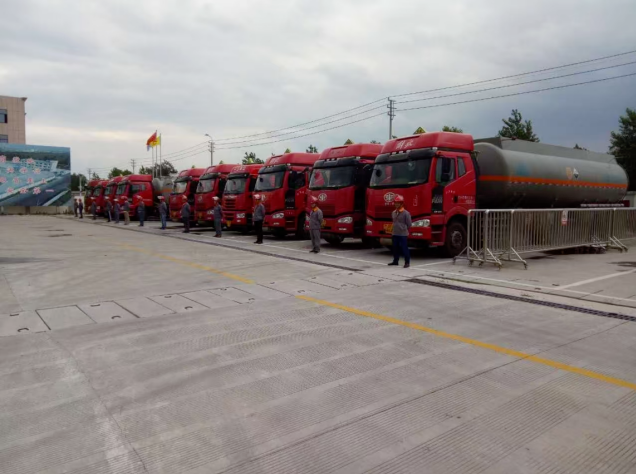
For transportation, the company established its affiliate Taixing Xinglu Logistics Co., Ltd., owning 11 dedicated hazardous chemical transport trailers, among which 6 vehicles are exclusively for food additive ammonia water with dedicated transport and isolated tanks. Since operation commencement, the company has maintained a public record of zero complaints regarding quality and supply assurance.
These qualifications constitute candidate eligibility rather than automatic suitability. Buyers still need to conduct item-by-item verification against their concentration requirements, annual consumption, site receiving conditions and audit checklists: whether delivery frequency matches production rhythm, whether batch test data covers concerned parameters, and how dedicated transport for food-grade products is scheduled. Conclusions on whether to pay a slight premium for stability vary based on verification outcomes.
Back to cost control, ammonia water procurement is more of a risk management exercise than a pure price negotiation. A practical approach is to divide RFQ documents into four sections: product grade & applicable standards, concentration & impurity limits, delivery terms and document checklist, and request supporting evidence from each candidate supplier. For applications with strict batch indicator requirements, conduct small-batch trials and compare test data before finalizing annual volume and price locking terms. As a self-manufactured multi-grade ammonia water supplier, Taixing Yimin Chemical Co., Ltd. can be assessed against this checklist to confirm whether its production capacity, testing and logistics capabilities fit your requirements. Reliable cost reduction usually comes from fully quantifying hidden risks upfront instead of simply squeezing unit prices.


